
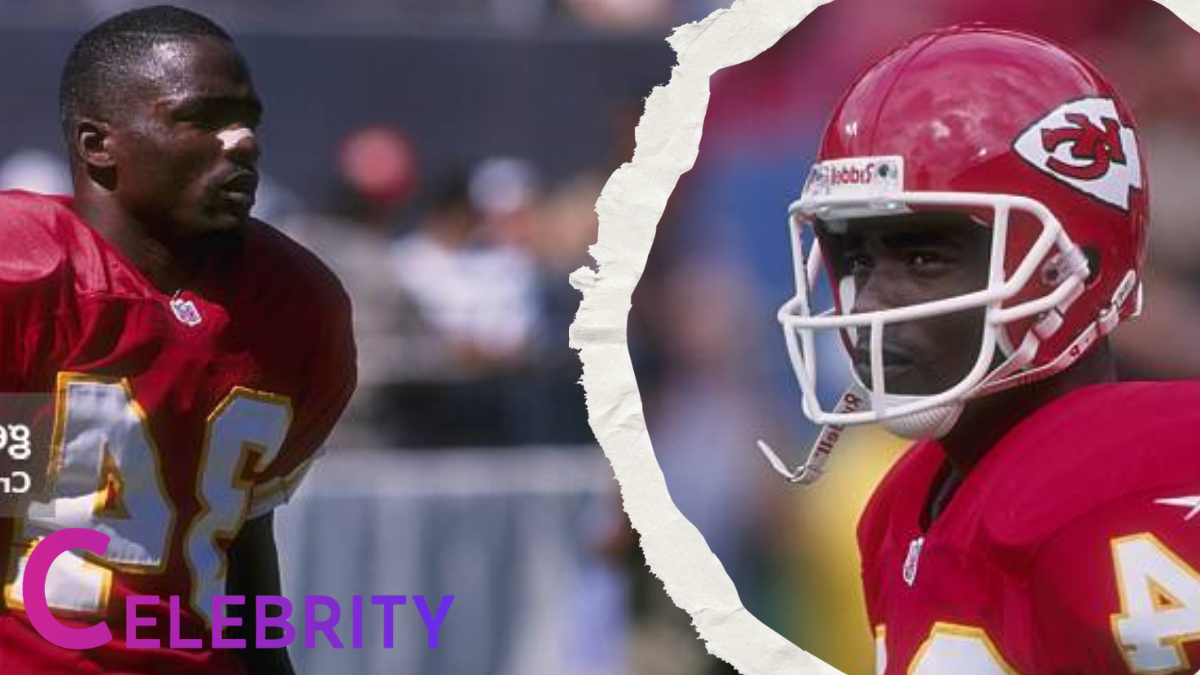
Discover Dale Carter’s full NFL career — Kansas City Chiefs Dale Carter Retirement, Kansas City Chiefs cornerback, 4x Pro Bowl selection, NFL Defensive Rookie of the Year 1992. Learn about his Denver Broncos contract, suspensions, Baltimore Ravens retirement, and Hall of Fame case.
Quick Facts Table
| Detail | Information |
|---|---|
| Full Name | Dale Lavelle Carter |
| Date of Birth | November 28, 1969 |
| Age (2026) | 56 Years Old |
| Birthplace | Covington, Georgia, USA |
| High School | Newton High School, Covington, Georgia |
| College | University of Tennessee |
| College Honors | 2× First-team All-SEC (1990, 1991); Consensus All-American (1991) |
| NFL Draft | 1992, 1st Round, 20th Overall Pick |
| Position | Cornerback |
| Height | 6 feet 1 inch (185 cm) |
| Weight | 194 lbs (88 kg) |
| NFL Teams | Kansas City Chiefs (1992–1998); Denver Broncos (1999–2001); Minnesota Vikings (2001); New Orleans Saints (2002–2003); Baltimore Ravens (2004–2005) |
| Career Seasons | 12 Seasons |
| Career Interceptions | 24 |
| Career Tackles | 95 solo, 18 assists |
| Fumble Recoveries | 9 |
| Pro Bowl Selections | 4 (1994, 1995, 1996, 1997) |
| All-Pro Honors | 2× Second-team All-Pro (1995, 1996) |
| Rookie Award | NFL Defensive Rookie of the Year (1992) |
| Denver Contract | 4-year deal (reported figures vary: $22.8M–$72.8M) |
| Retired | After 2005 season |
| Notable Family | Brother Jake Reed (WR); Nephew J.R. Reed; Son Nigel Warrior |
| Post-NFL | Founded non-profit for at-risk youth |
| HOF Monitor Score | 37.15 (Pro Football Reference) |
Some careers produce statistics. Others produce stories. Dale Carter’s thirteen-year NFL journey produced both — and the story is far more complicated, far more human, and far more instructive than the statistics alone can communicate. He arrived in Kansas City in 1992 as one of the most gifted cornerbacks in his draft class. Furthermore, he left the game in 2005 having visited five franchises, survived a full-season suspension, and ultimately founded a non-profit dedicated to helping young people avoid the mistakes that cost him years of his own career. His retirement marks the end of a career that defied simple categorisation — brilliant and troubled, celebrated and cautionary, all at once.
Kansas City Chiefs Dale Carter Retirement
Dale Carter last played in the NFL during the 2005 season with the Baltimore Ravens. After that season concluded, he did not return to the league. He retired at 36 years old — having played 12 NFL seasons across five franchises, earned four Pro Bowl selections, recorded 24 career interceptions, and navigated personal challenges that made the final chapters of his career look very different from the extraordinary promise of its opening.
His retirement did not arrive with a formal press conference or a celebratory send-off. Instead, it came quietly — the natural conclusion of a career that had gradually wound down through later stops in Minnesota, New Orleans, and Baltimore. Nevertheless, the body of work Carter left behind, particularly from his years with the Kansas City Chiefs, earns him a permanent place in the conversation about the greatest cornerbacks of the 1990s NFL.
Furthermore, his retirement marked a beginning as well as an ending. Upon leaving the game, Carter founded a non-profit organisation specifically designed to help young men and women avoid the same off-field mistakes that derailed his own career. That post-career work represents perhaps the most meaningful chapter of all — a man using his own failures constructively to protect others from the same path.
Dale Carter NFL Career Timeline
Carter’s NFL career spans 1992 to 2005 across five franchises. Understanding each phase requires understanding the very different circumstances that defined each stop.
1992–1998 — Kansas City Chiefs Carter arrived in Kansas City as the 20th overall pick of the 1992 NFL Draft after an outstanding college career at the University of Tennessee. There, he earned two First-team All-SEC selections in 1990 and 1991, a Consensus All-American honour in 1991, and established himself as one of the most gifted defensive backs in college football. Consequently, the Chiefs invested a first-round pick in him with high expectations.
Those expectations proved well-founded on the field. Carter delivered immediate impact, winning NFL Defensive Rookie of the Year in 1992 and earning PFWA All-Rookie Team honours. He combined excellent instincts, elite speed, and a physical play style that made him one of the most difficult cornerbacks in the AFC to attack. Over six seasons in Kansas City, he accumulated the vast majority of his career statistics and all four of his Pro Bowl selections.
1999–2001 — Denver Broncos Carter signed with Denver in 1999 in one of the most lucrative defensive back contracts the NFL had seen to that point. However, his single completed season with the Broncos disappointed expectations. Subsequently, a full-season suspension in 2000 effectively ended his time with Denver, and the Broncos released him during the 2001 season.
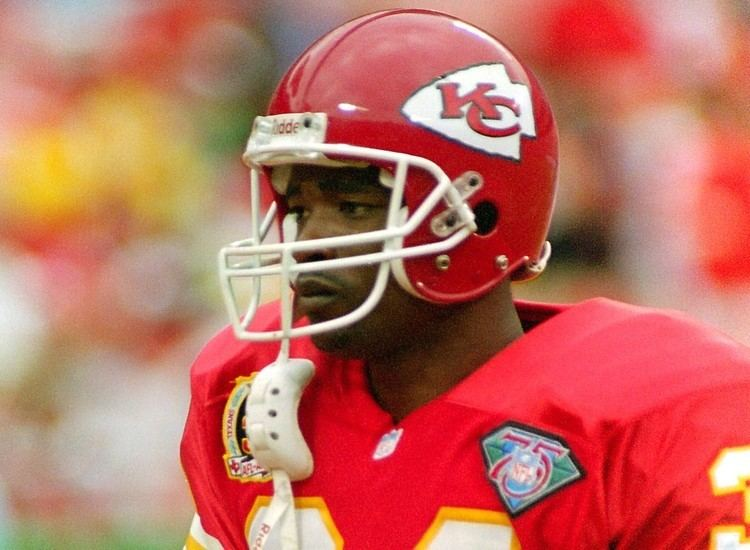
2001 — Minnesota Vikings Carter joined the Vikings in 2001 for a brief stop that added one more franchise to his career résumé without generating significant statistical impact.
2002–2003 — New Orleans Saints He played two seasons with the Saints, providing veteran presence and depth in their secondary before a serious medical issue interrupted his career entirely.
2004–2005 — Baltimore Ravens Carter missed the entire 2004 season due to a blood clot in his lung — a genuinely serious health crisis that had nothing to do with football but threatened his ability to return at all. He came back in 2005 and played his final NFL season with Baltimore before retiring after that year concluded.
Dale Carter Pro Bowl Years
Carter earned four consecutive Pro Bowl selections — in 1994, 1995, 1996, and 1997 — representing the absolute peak of his on-field achievement and the period during which he ranked among the two or three best cornerbacks in the entire NFL.
Additionally, he earned two Second-team All-Pro honours in 1995 and 1996 — reinforcing that his Pro Bowl selections reflected genuine statistical and competitive excellence rather than simply reputation or longevity. The All-Pro designation specifically means that football journalists, coaches, and analysts who voted on these teams regarded Carter as one of the two best cornerbacks in the league for those seasons.
His four-year Pro Bowl run came during one of the most competitive eras in NFL cornerback history. Deion Sanders, Rod Woodson, and Aeneas Williams were all active during this period. Furthermore, the AFC West — Carter’s division — featured outstanding receivers and quarterbacks who tested defensive backs every week. Consequently, holding your own in that environment while earning four consecutive Pro Bowl selections represents a genuine achievement.
Over his career, he accumulated 24 interceptions, 95 solo tackles, 18 assists, one sack, and nine fumble recoveries across 12 seasons and five franchises. Those numbers, considered alongside his four Pro Bowl selections and two All-Pro honours, form the statistical foundation of a career that absolutely merited its sustained recognition from peers and fans.
Dale Carter Denver Broncos Contract
The defining financial moment of Carter’s career arrived in 1999 when he signed with the Denver Broncos. The contract was significant enough to make headlines. Sources vary on the exact total value — some cite $72.8 million over four years while others report $22.8 million — with the disparity likely reflecting differences between reported total package value and actual guaranteed money. Regardless of the exact figure, Carter’s deal made him one of the highest-paid defensive backs in NFL history at the time of signing.
However, the contract did not produce the on-field results either party had hoped for. Carter’s single completed season with Denver in 1999 disappointed given the investment Denver had made. Furthermore, his off-field difficulties quickly overshadowed any professional recovery he might have achieved.
The Denver contract represents one of the most poignant elements of Carter’s story. He arrived in Colorado as one of the most celebrated defensive backs of his generation. He had four Pro Bowl appearances, two All-Pro selections, and a seven-year record of consistent, elite-level performance. By contrast, his time with Denver lasted barely one season before a suspension ended his tenure entirely. The gap between the promise of that contract and its actual outcome illustrates how quickly careers — and financial futures — can collapse when personal discipline breaks down.
Dale Carter Substance Abuse Suspension
The most painful chapter of Dale Carter’s career centres on the NFL’s substance abuse policy and the repeated violations that permanently altered his trajectory. Carter faced multiple documented violations of the NFL’s substance abuse programme during his time in Kansas City and beyond.
His fourth substance abuse violation triggered the most severe consequence available under NFL policy: a full-season suspension for the entire 2000 season. That suspension cost him an entire year of playing time at what should have been the peak earning years of his Denver contract. Additionally, it cost him a full year of statistical production at a stage when he might have rebuilt his reputation and performance after a disappointing 1999 campaign.
The Denver Broncos subsequently released him during the 2001 season — a direct consequence of the suspension and its impact on his availability, his conditioning, and the team’s confidence in his reliability. Consequently, the pattern of substance abuse violations effectively ended the lucrative phase of his career and forced him onto a path of shorter-term, lower-profile contracts with subsequent franchises.
Carter has never publicly shied away from acknowledging these failures. Furthermore, his post-retirement decision to found a non-profit organisation focused on helping young people avoid similar mistakes demonstrates a mature, accountable relationship with his own history. He did not simply move past his failures — he converted them into a purpose.
Dale Carter Baltimore Ravens Retirement
Carter’s final chapter unfolded in Baltimore. His path to the Ravens was neither smooth nor straightforward. He missed the entire 2004 season due to a blood clot in his lung — a medical emergency that had nothing to do with football and everything to do with the physical toll that professional sport places on the human body. The blood clot required serious medical intervention and raised genuine questions about whether Carter would ever play again.
He answered those questions by returning for the 2005 season with the Baltimore Ravens. Playing at 35 and 36 years old, after a full-year medical absence, Carter demonstrated the physical resilience and competitive drive that had defined his best years with Kansas City. His role in Baltimore was limited compared to his Pro Bowl peak. Nevertheless, his presence in the Ravens’ secondary added veteran experience and a professional approach that younger players in that locker room could observe and learn from.
After the 2005 season concluded, Carter did not receive another contract offer or pursue one. His retirement was quiet and natural — the conclusion that careers like his tend to reach when the body and the opportunity align in a final endpoint. He retired having played his last competitive snap at 36, in Baltimore, having worn five different NFL uniforms across 13 years of professional football.
Dale Carter Hall of Fame Chiefs Discussion
The question of whether Dale Carter deserves consideration for the Pro Football Hall of Fame generates genuine debate among NFL historians and Kansas City Chiefs fans who watched his peak years closely.
The statistical case presents a mixed picture. His Pro Football Reference Hall of Fame Monitor score stands at 37.15 — placing him 122nd among defensive backs in the historical database. The average HOF defensive back scores approximately 96.93. Therefore, by that metric, Carter falls meaningfully short of the statistical profile that typically earns Hall of Fame election.
However, statistics do not tell the complete story. Furthermore, the Hall of Fame Monitor system cannot fully account for the context of a career played during one of the most competitive cornerback eras in NFL history — when players like Deion Sanders, Rod Woodson, and Aeneas Williams occupied the top tier. Earning four consecutive Pro Bowl selections in that environment, against that competition, alongside those peers, reflects genuine elite-level performance.
The substance abuse suspensions and the premature end to his highest-level contributions undoubtedly factor into Hall of Fame discussions. A career that might have included six or seven Pro Bowl selections under different circumstances was limited to four. Seasons that might have added to his interception total never occurred. Consequently, the statistical case that might otherwise support Hall of Fame consideration is thinner than it could have been.
Chiefs fans make a legitimate argument that Carter at his absolute peak — from 1992 through 1997 — represented genuine Hall of Fame calibre play. However, the full career arc, including the suspensions and the diminished later years, makes the overall case difficult to sustain in direct competition with the defensive backs who do warrant serious HOF consideration based on longer, cleaner statistical records.
The honest assessment is that Dale Carter played at a Hall of Fame level for approximately five seasons and at a very good NFL level for several more. The gap between those two phases, caused by choices he has publicly acknowledged and taken responsibility for, ultimately places him just outside the Hall of Fame conversation’s most serious tier.
Dale Carter’s Legacy Beyond the Numbers
Dale Carter’s legacy sits at an unusual intersection. On one hand, his on-field achievements during the 1992–1997 period place him among the best cornerbacks of his generation — not just in Kansas City, but in the entire NFL. Four consecutive Pro Bowls, two All-Pro honours, and a Defensive Rookie of the Year award represent a record that most NFL cornerbacks never approach.
On the other hand, his career also serves as one of the most instructive examples in NFL history of how personal choices — made off the field, outside of game preparation and competition — can erode a brilliant talent and truncate a legacy that might otherwise have been definitively Hall of Fame calibre.
Furthermore, his post-retirement work offers the most complete picture of who Dale Carter became after football. He did not retreat from the public failures of his career. Instead, he addressed them directly by founding a non-profit aimed at protecting young people from the same mistakes. That decision — to convert personal failure into community service — may ultimately matter more than any interception, Pro Bowl selection, or contract figure from his playing years.
In Kansas City, Carter’s legacy remains warm and genuine. Chiefs fans who watched him in his prime remember a cornerback who made Arrowhead Stadium a more difficult place for opposing receivers to operate. Moreover, they remember a player who carried himself with competitive intensity and physical confidence that announced, clearly, that entering his coverage zone carried consequences.
The NFL has seen many talented cornerbacks across its history. Fewer of them, however, can claim both the kind of peak performance that Dale Carter delivered in Kansas City and the kind of post-career redemption arc that he has pursued since retirement. Together, those two halves of his story make him one of the most genuinely complex and compelling figures in the history of the Kansas City Chiefs defence — and a career worth understanding in its complete, unfiltered, human totality.
One thought on “Kansas City Chiefs Dale Carter Retirement – Cornerback Legacy latest guide 2026”